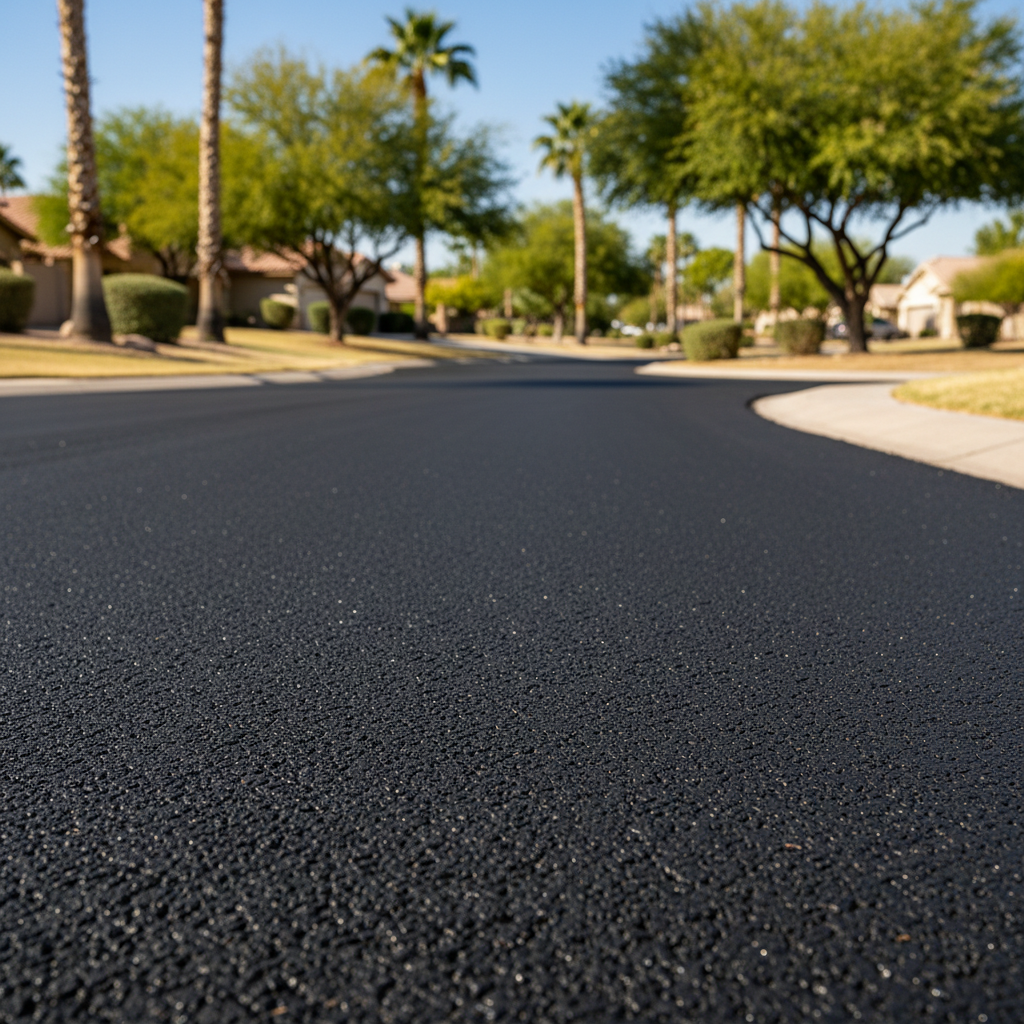
Alright, let's talk asphalt. I get a lot of the same questions from homeowners around Tempe, and it makes sense, doesn't it? You're putting money into your property, and you want to make sure you're doing it right. So, I figured I'd put together some straight answers to the stuff I hear most often. No marketing fluff here, just what I've learned working on driveways and parking lots across this city for years.
How long does a new asphalt driveway actually last in Tempe's heat?
That's a big one, especially with our summers. A properly installed asphalt driveway, one that uses quality materials and gets good compaction, should give you a solid 15 to 20 years here in Tempe. Maybe even a little more if you're diligent with maintenance. The key words there are 'properly installed' and 'quality materials.' If someone cuts corners on the base or uses a cheap asphalt mix, you'll see it fail a lot faster. Our intense sun and the way the ground expands and contracts with temperature swings really put asphalt to the test, so a good initial job is crucial.
What's the deal with sealing my asphalt driveway? Is it really necessary?
Absolutely, it's necessary. Think of sealcoating as sunscreen for your driveway. Our UV rays here are brutal, and they'll break down the asphalt binder over time, making it brittle and prone to cracking. Sealcoating puts a protective layer over the surface, shielding it from the sun, water, and even oil spills. It also helps restore some of the asphalt's flexibility. I usually recommend sealing a new driveway about 6-12 months after we lay it, then every 2-3 years after that. Honestly, it's the single best thing you can do to extend your driveway's life and keep it looking good.
Can I pave over an existing concrete driveway with asphalt?
You can, but it's not always the best idea, and it depends entirely on the concrete's condition. If your concrete driveway is in pretty good shape – just a few minor cracks, no major heaving or crumbling – then yes, we can often pave directly over it. The concrete acts as a very stable base. However, if that concrete is severely cracked, has significant dips, or is breaking apart, paving over it will just transfer those problems to your new asphalt surface pretty quickly. We'd need to remove the old concrete first. It's something we'd have to assess on-site, but generally, a solid concrete base can be a good foundation for asphalt.
Why do I see cracks forming in my asphalt driveway, even if it's not that old?
Cracks are a common headache, and they pop up for a few reasons. Sometimes it's just the natural aging process – asphalt gets brittle over time. Other times, it's poor drainage allowing water to get under the surface and erode the base, especially with our monsoon rains. Tree roots are another big culprit, particularly in older neighborhoods like those around Papago Park where mature trees are common. Or, it could be heavy loads, like parking an RV on a driveway not designed for that kind of weight. The good news is, most cracks can be repaired if caught early, preventing them from turning into bigger problems like potholes.
How long after paving can I drive on my new asphalt driveway?
Patience is key here. While the surface might look solid, the asphalt needs time to cure and harden properly. For most residential driveways, I usually tell folks to wait at least 2-3 days before driving on it. If it's a particularly hot day, like a typical July afternoon in Tempe, we might even recommend waiting a bit longer, maybe 4-5 days, especially for heavier vehicles. Parking your car in the exact same spot every day for the first week or two can also create indentations, so try to vary your parking spots if you can. It's a small inconvenience for a long-lasting surface.
What's the difference between asphalt and blacktop? Are they the same thing?
Yeah, people use those terms interchangeably a lot, and for residential applications, they pretty much refer to the same thing: an asphalt concrete pavement. 'Asphalt' is the technical term for the binder used to hold the aggregate (like stone and sand) together. 'Blacktop' is more of a common, informal term for the finished product. When we're talking about your driveway, whether you say asphalt or blacktop, you're talking about the same durable, flexible paving material. We use high-quality asphalt mixes at Alpha Asphalt Tempe, designed to stand up to our local conditions.
What kind of preparation is needed before you lay down new asphalt?
This is where a lot of the quality of your driveway comes from, even though you don't see it. First, we've got to clear the area – remove any old pavement, dirt, or debris. Then, it's all about the subgrade, which is the soil underneath. We'll grade it properly to ensure good drainage away from your house and compact it thoroughly. After that, we lay down a good, solid base layer, usually crushed aggregate, and compact that too. This base is what supports the asphalt and distributes the weight of vehicles. If you skip or skimp on any of these steps, you're setting yourself up for problems down the road. A good foundation makes all the difference.