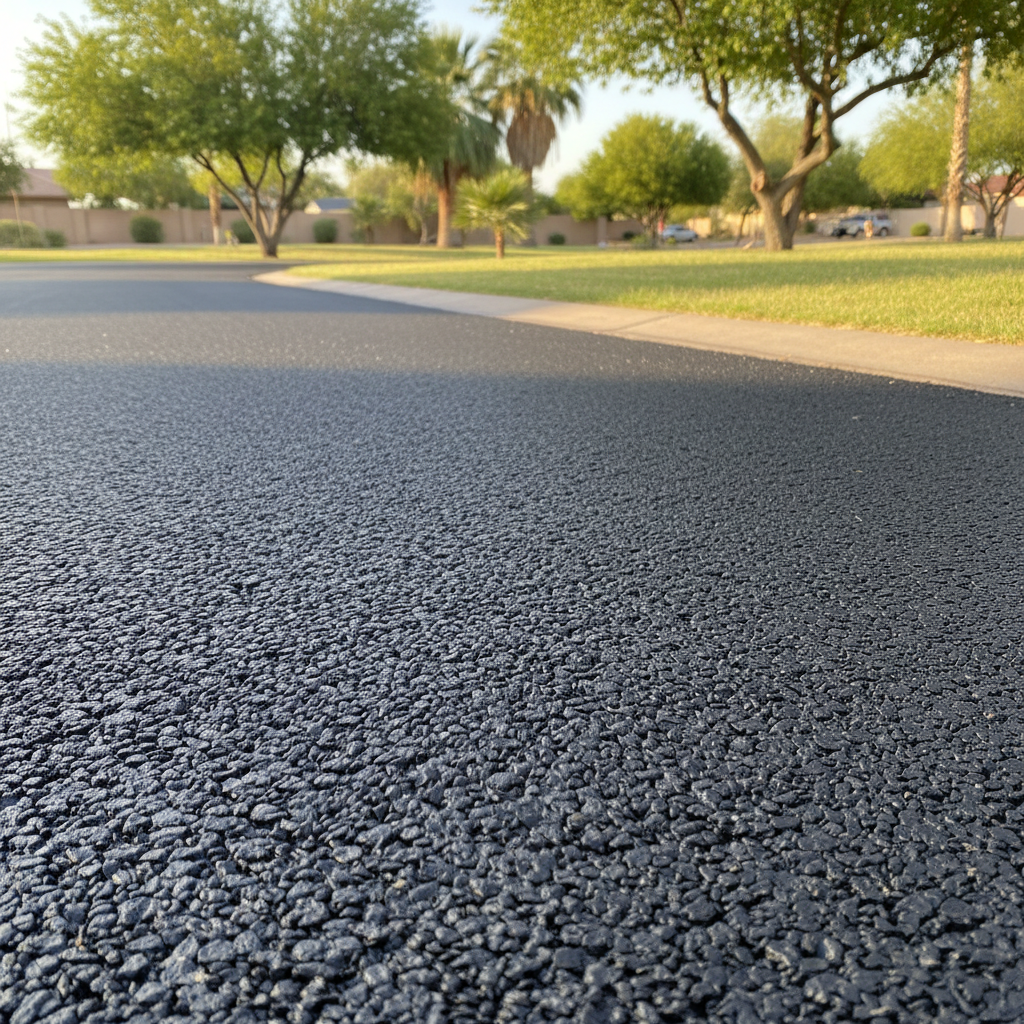
What's the real difference between asphalt and concrete for a residential driveway?
This is probably the most common question I get asked. Honestly, both asphalt and concrete can give you a solid driveway, but they're not the same thing at all. Asphalt is flexible, you see. We make it from aggregates – things like sand and gravel – all bound together with bitumen, which is a petroleum product. Just picture a really thick, super tough road surface. It handles our crazy temperature swings here in Tempe incredibly well because it can expand and contract without cracking as easily as concrete does. Plus, it's usually quicker to put down and cheaper up front. Concrete, on the other hand, is rigid. It's a mix of cement, water, and those same aggregates. It's stronger when it comes to compressive strength, meaning it can take heavy loads without deforming. It also tends to last longer if it's installed and maintained correctly, but it's much more likely to crack from temperature changes or ground movement, especially if the sub-base isn't perfect. Repairs on concrete are usually more noticeable too; often you're looking at replacing a whole slab instead of just patching. For most residential driveways around here, especially with our intense summer heat, asphalt is often the more practical and cost-effective choice in the long run.
How long does a new asphalt driveway actually last in Tempe's climate?
Alright, so you're looking for a straight answer on how long it'll hold up. A properly installed asphalt driveway here in Tempe, with the right maintenance, should easily give you a good 15 to 20 years. Sometimes even more! But that comes with a few big "ifs." First, "properly installed" means a solid, well-compacted sub-base, the right thickness of asphalt, and good drainage. You just can't cut corners there. Second, "right maintenance" is absolutely key, especially with our brutal summers. That means regular sealcoating – I usually tell folks to do it every 2-3 years after the first year. Sealcoating protects the asphalt from those intense UV rays we get, and from oxidation, which stops it from drying out and getting brittle. It also helps keep water out, and water is asphalt's biggest enemy. If you neglect it, you'll see it start cracking and crumbling much faster, probably cutting its lifespan in half. It’s like anything else, really; take care of it, and it'll take care of you.
What kind of preparation is needed before paving, and why is it so important?
The prep work? It's everything, seriously. You could lay down the best asphalt in the world, but if the foundation isn't right, it's going to fail. First, we clear the area completely – any old driveway material, plants, debris, all gone. Then comes the grading. We need to make sure the surface slopes correctly to ensure water drains away from your house, not towards it. Water pooling on or under your driveway is just asking for trouble. After grading, we put in the sub-base. This is typically a layer of compacted aggregate, like ABC (Aggregate Base Course), which provides a stable, load-bearing foundation. In Tempe, with our expansive clay soils in some areas, getting this sub-base just right is even more critical. We might even need to dig deeper and bring in more stable fill if the existing soil isn't good enough. This layer has to be compacted to a specific density; it's what supports the entire driveway. If the sub-base isn't stable or compacted properly, you'll get settling, cracking, and potholes pretty quickly. It’s the backbone of your driveway.
Can I pave over my existing driveway, or does it always need to be removed?
Sometimes, yes, you can pave over an existing asphalt driveway, but it's definitely not a one-size-fits-all solution. It really just depends on how good (or bad) the old driveway is. If your current asphalt is generally sound – meaning it has minimal cracking (mostly hairline, not that nasty alligator cracking) and no big potholes or drainage issues – then an overlay can be a great option. It’s basically just putting a new layer of asphalt on top of the old one. This can save you some money because you're not paying for full demolition and removal. However, if the existing driveway has extensive cracking, major potholes, significant drainage problems, or structural failures in the sub-base, then an overlay is just putting a band-aid on a much bigger problem. Those underlying issues will eventually show right through the new layer, and you'll be dealing with cracks and failures again in a few years. In those cases, a full removal and replacement is the only way to get a long-lasting, quality job. We always do a thorough inspection to figure out the best approach for your specific situation.
How does Tempe's intense heat affect the paving process and the finished product?
Our Tempe heat is a beast, no doubt about it, and it absolutely changes how we pave. When we're laying asphalt, the material needs to be hot – usually somewhere around 250-325 degrees Fahrenheit – so it's workable and compacts properly. In the summer, with ambient temperatures regularly hitting 110 degrees, the asphalt cools down much faster than it would in cooler climates. This means we have to work quickly and efficiently. We can't let the asphalt sit too long before compacting it, or it won't get to the right density, which makes for a weaker, shorter-lived driveway. We often start earlier in the morning during the summer to beat the worst of the heat. The finished product actually benefits from the heat during the curing process; the sun helps the asphalt fully cure and harden. However, the constant expansion and contraction from our huge daily and seasonal temperature swings are what make good material and proper installation, especially the sub-base, so critical for preventing premature cracking. That's why Alpha Asphalt Tempe takes extra care with our mixes and compaction methods.
What kind of ongoing maintenance will my new asphalt driveway need?
Maintenance is super important if you want your investment to last. The main thing you'll need to do is sealcoating. I recommend waiting about 6-12 months after installation for the asphalt to fully cure, then getting it sealcoated. After that, every 2-3 years is a good schedule for most residential driveways. Sealcoating protects the asphalt from UV rays, water penetration, and oil/gas spills. It keeps the surface flexible and stops it from drying out and getting brittle. You'll also want to keep an eye out for any small cracks that develop. Catching and sealing these early with a good crack filler prevents water from getting underneath and causing bigger problems like potholes. Keep it clean too; sweep off debris, leaves, and dirt. Don't let heavy equipment or vehicles sit on it for extended periods, especially in the summer, as that can cause depressions. And if you have any oil or gas spills, clean them up quickly to prevent damage to the asphalt binder. A little proactive care goes a long way.
How long until I can drive on my new asphalt driveway?
This is a common question because everyone wants to get back to normal as soon as possible, right? Generally, you can walk on a newly paved asphalt driveway within a few hours, but you need to wait longer before driving on it. For light vehicle traffic – your car, a small SUV – I usually recommend waiting at least 24 to 48 hours. If it's a particularly hot day here in Tempe, or if you have heavier vehicles, it's safer to wait 72 hours, maybe even up to 5 days, just to be absolutely sure. Asphalt needs time to cool and harden completely. Driving on it too soon, especially when it's still warm and soft, can cause tire marks, indentations, or even rutting, which you definitely don't want on your brand new driveway. We'll give you specific instructions based on the day's temperature and the mix we used, but patience is key for that initial curing period.