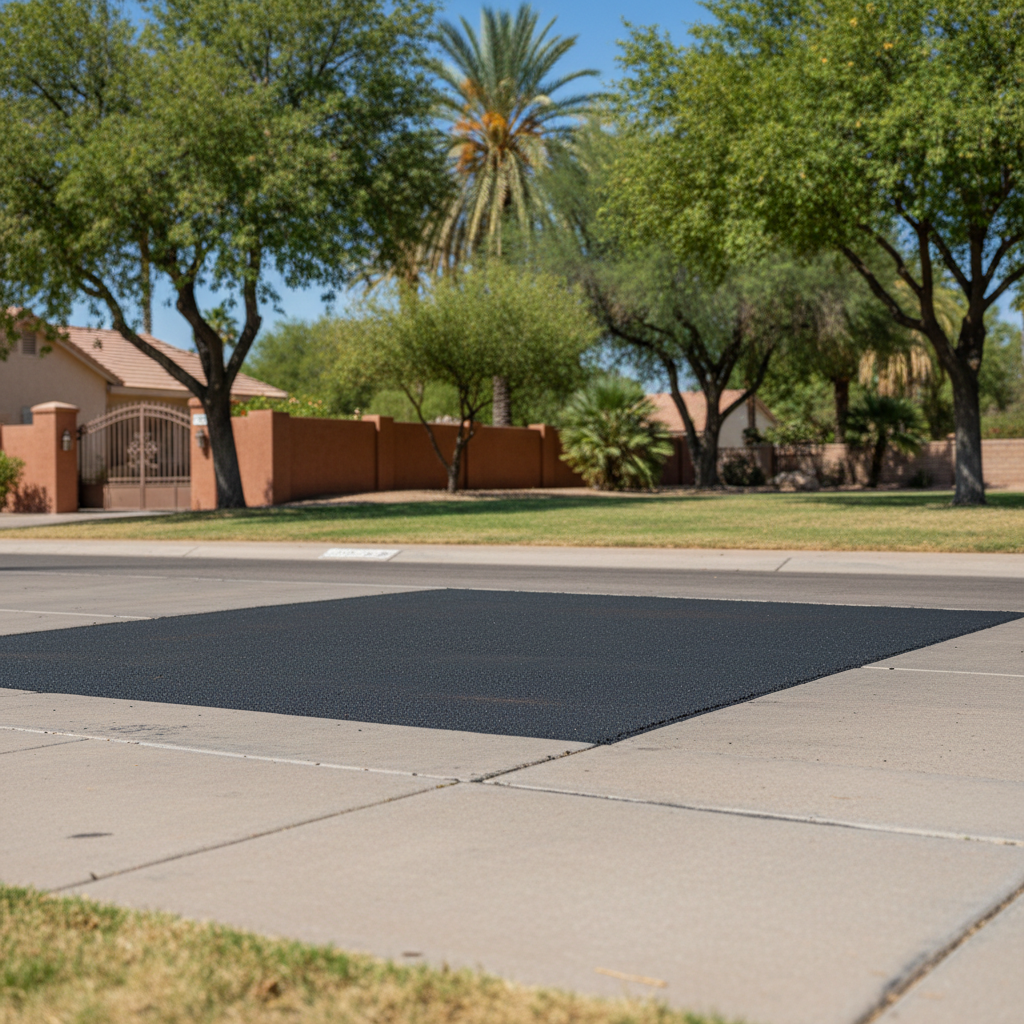
Alright, let's talk asphalt patching for your home right here in Tempe. I often see folks make the same few blunders when they're trying to get their driveway fixed up. It usually ends up costing them more time, more money, and a whole lot of headaches down the road. You want a good, lasting repair, don't you? So, let's just cut to the chase and talk about what you really need to avoid.
Mistake #1: Ignoring the 'Why' Behind the Damage
This is a big one, truly. You spot a pothole or a crack, and your first thought is probably, "I need that patched!" Fair enough. But if you don't figure out why that damage happened in the first place, you're basically putting a band-aid on a gushing wound. Is it poor drainage? Is your irrigation system leaking right underneath the asphalt? Or is it simply old age and constant sun exposure, which we certainly get plenty of here in Tempe?
For instance, I've seen countless driveways in older neighborhoods, like those around Papago Park, where the sub-base wasn't prepped correctly years ago. Or maybe water from a monsoon storm just sits and seeps. If you just patch over that, the problem will absolutely come right back. A good contractor, like us at Alpha Asphalt Tempe, will ask questions and investigate the root cause. If they don't, that's a red flag, plain and simple. You're paying for a real fix, not just a temporary cover-up.
Mistake #2: Going for the Cheapest Bid Without Asking Questions
Look, I totally get it. Everyone wants to save a buck. But when it comes to asphalt, the cheapest bid is very rarely the best value. You're not buying some commodity here; you're buying a service, expertise, and materials that need to hold up to our brutal Arizona sun and those occasional heavy rains.
When you get bids, don't just stare at the bottom line. Ask:
- What kind of asphalt mix are they using? Is it a quality hot mix, or some cold patch stuff that won't last?
- How are they prepping the area? Are they cleaning it thoroughly, cutting out the bad sections, and applying a tack coat? Or are they just dumping new asphalt on top of loose debris?
- What's their warranty? A reputable company will stand behind their work, no question.
- Do they have references? Call them. Ask about their experience.
If a bid seems too good to be true, it probably is. You'll just end up paying twice – once for the cheap, shoddy job, and then again for a proper repair.
Mistake #3: Not Understanding the Different Patching Methods
There isn't just one way to patch asphalt, you know. The right method really depends on the type and extent of the damage. Homeowners often don't know the difference, and some less-than-scrupulous contractors might try to take advantage of that.
You've got things like:
- Skin Patching: This is basically laying a thin layer of new asphalt over the existing surface. It's often cheap, but it's usually just a temporary cosmetic fix. It won't last long, especially with our wild temperature swings.
- Saw-Cut/Remove and Replace: This is the gold standard for potholes and larger damaged areas. We cut out a neat, square section around the damage, remove the old asphalt, prep the base, apply a tack coat, and then lay down new hot asphalt. This creates a much stronger, longer-lasting repair that integrates better with the existing pavement.
- Crack Filling: This is different from patching. It's about sealing cracks to prevent water from getting in, not actually repairing structural damage.
Make sure your contractor explains which method they're proposing and why. If they just say "we'll patch it," push for details. You need to know you're getting the right solution for your specific problem.
Mistake #4: Not Checking for Proper Licensing and Insurance
This isn't just about asphalt; it's about any contractor you hire. In Arizona, if a job is over a certain dollar amount (currently $1,000 for residential, but always check the current ROC limits), the contractor needs to be licensed by the Registrar of Contractors (ROC). You can easily look them up on the ROC website, by the way.
Why does this matter? A licensed contractor has met certain requirements, passed exams, and is bonded. If something goes wrong, you have recourse. Unlicensed contractors often don't carry proper insurance either. If one of their crew gets hurt on your property, or if they damage your sprinkler system, you could be on the hook. Don't risk it.
It's your property, your money, and your peace of mind. Taking a little extra time upfront to understand the process, ask the right questions, and vet your contractor will save you a ton of grief. You want that patch to blend in, hold strong, and protect your investment, not be a constant reminder of a bad decision.